
In several earlier editions of my blogs, we already noticed: when you talk about cultural differences, you talk about ‘comparison’. The characteristics of a particular culture are usually not defined in absolute terms. They are rather described in relation to other cultures. A culture is more this or more that compared to other cultures. Quite often, cultural specialists use an axis to depict differences between cultures or countries: “On the axis from A to Z, culture 2 is more on the Z-side”:
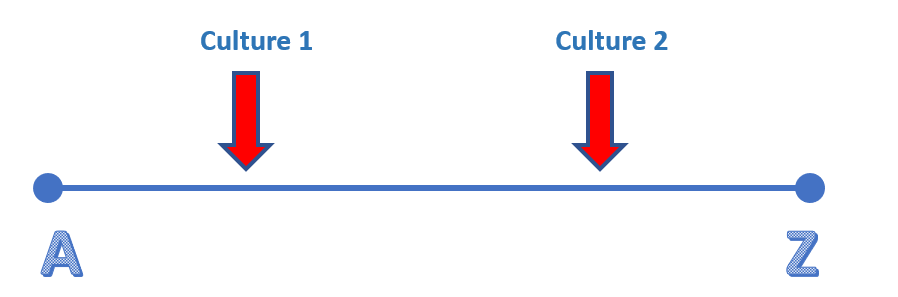
Examples are mapping cultures on the axis from ‘task-oriented’ to ‘relation-oriented’. Or on the axis from ‘low uncertainty avoidant’ to ‘high uncertainty avoidant’. Or from ‘indulging’ cultures to ‘restraining´ ones. And so on.
The cultural comparison I want to talk about in this blog is a rather metaphorical one: the differences between so-called ‘peach cultures’ on the one hand, and ‘coconut cultures´ on the other. And of course, you can find in-between cultures.
As far as I could trace back, the terms of peaches and coconuts when it comes to cultures were first coined by the German-American psychologist Kurt Lewin. It was popularised by Fons Trompenaars and Charles Hampden-Turner. Erin Meyer, a cultural specialist of the next generation, again elaborates on these terms in her work.
The peach-coconut metaphor describes the way that people from different cultures engage in social interaction and friendships. The terms are obviously derived from the characteristics of these two fruits.
Peaches
Typical ‘peach people’, like the fruit they are named after, have a soft outside that is very easy to get into. Just gently push on a ripe peach, and it gives way. However, peaches have a hard core that is almost impossible to penetrate. Meaning it takes a lot of time to get beyond the outer friendliness of peaches, and to cultivate a deep and trusting friendship with them.
The peaches of this world are easy-going on the outside. They often greet strangers with friendliness and quickly jump to what may seem to others like rather personal conversation topics. Their thin outer skin makes it relatively easy for an outsider to enter the peach’s world as ‘a friend’ or what may at least feel like one.
Peaches easily grants trust. They tend to divide up their relationships into neatly organised, interest-based segments: work friends, school friends, leisure friends, etc. They prefer their friend groups to remain separate slices of their lives, meaning they don’t easily mix these groups. Loyalty and obligation levels are lower. As a result, when the common interest that connects you with a peach changes or disappears, often so too does the friendship.

Coconuts
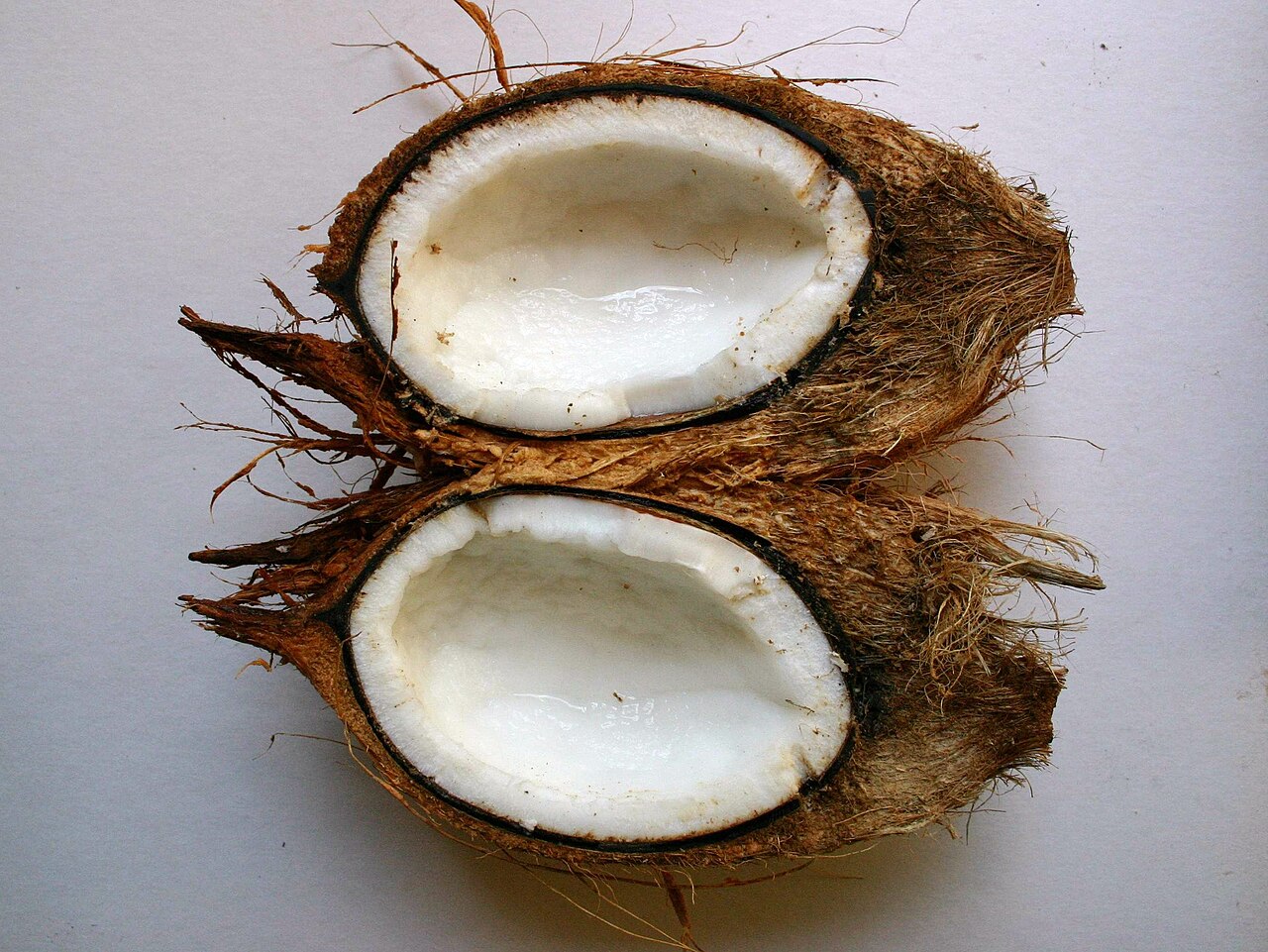
With coconuts, it is the opposite. It takes quite a bit of effort to get inside a coconut. But once you’re in, you are totally in. And the whole inside, the flesh, the milk, everything is available to you.
Coconut people give totally different first impressions. Rather than the friendly and inviting exterior of the peach, coconuts may present a hard and rough outer side. You cannot simply ‘bite right into’ a coconut, and if you try too hard to do so, you may actually push them away from you. Trust has to be earned, and that takes time and effort.
Coconuts do not typically divide their friends into distinct segments. Meaning their friendships are not necessarily interest-based. Rather, they are focused on the whole of the person. They may cut across many different interests since people work and play together and regularly combine different aspects of their lives. Loyalty and obligation levels are high.
Potential Misunderstandings
Maybe you can already envision some potential misunderstandings arising when typical peaches and typical coconuts interact with one another. Coconuts may easily mistake the outer friendliness of the peach for a ‘deep’ friendship that they would traditionally reserve this friendliness for. They may be a bit surprised (‘Ho now, this went fast’), but it definitely feels good. Only later to realise that this wasn’t necessarily ‘friendship’ in their sense of the word, it was ‘just a friendly conversation’. Coconuts may feel taken aback by the very personal questions that a peach rapidly fires at them during a first-time encounter.
Peaches, on the other hand, may feel that coconuts are very reserved, that they stick to themselves in social settings, that they are either too shy to enter into a conversation or not interested in one. They may get the feeling that the coconut’s lack of quick responses, or their lack of personal questions back, means the coconut is not interested in them as a person.
The Dutch? A Mix.
In the overall literature, Dutch culture is often seen as being a blend of both peach and coconut characteristics. And I personally feel there is also a bit of a difference between the people in the big cities (more peachy) and rural areas (more coconut-like).
Peach traits: The Dutch are generally friendly and approachable, especially in informal settings. They may engage in small talk and share personal information more readily than in strictly coconut cultures. They tend to make a division between work friends (usually referred to as ‘colleagues’) and social friends, and to shield off the inner circle of their nuclear family.
Coconut traits: However, the Dutch can also exhibit coconut-like behaviours, particularly in formal or professional contexts. Initial interactions may be more reserved, and personal questions are typically avoided until a deeper relationship has been established.
Overall, Dutch culture can be seen as leaning towards a coconut culture, especially in formal situations, but it also incorporates peach-like friendliness in casual interactions. Understanding this blend can help you navigate social situations more easily.

Have a Look in the Mirror?
With that reflection on the Dutch, I conclude this blog. But not before inviting you to ‘take a little look in the mirror’: do you feel you are a peach? Or rather a coconut? Or maybe you are a mix of both, depending on the context?
